
How Foreign Buyers Can Solve Product Sourcing Efficiency in an Age of AI Customer Service Chaos
2026-06-05

You go to a sourcing platform. You find a promising supplier. You send a message. Within three seconds, a chatbot replies: “Hi, dear! How can I help you? Please reply 1 for price, 2 for MOQ, 3 for catalog…”
You reply 1. The bot sends a price list. You ask a follow-up question about material thickness. The bot repeats the same menu. You ask to speak to a real person. Silence. Or worse — “All our agents are busy. Please wait…” — and you wait forever.
This is the new reality of online sourcing. AI customer service is everywhere. It is cheap for suppliers, but it is killing efficiency for foreign buyers. Finding the right product at the right quality now takes twice as long — not because products are hard to find, but because humans are hard to reach.
So how do you, as a foreign buyer, cut through the AI noise and source efficiently again? Here is a practical, no-fluff guide.
1. Learn to Spot “Real Suppliers” vs “Chatbot-Only Storefronts”
Not every listing on Alibaba, Made-in-China, or Global Sources represents a real factory with real people. Many are trading companies or drop-shipping agents hiding behind automated replies.
Not every listing on Alibaba, Made-in-China, or Global Sources represents a real factory with real people. Many are trading companies or drop-shipping agents hiding behind automated replies.
How to spot a real supplier quickly:
- Look for verified factory badges (Gold Supplier, Assessed Supplier) — but don't stop there.
- Check product images: real factories have inconsistent backgrounds, not perfectly staged stock photos.
- Scan customer reviews for the words “real person,” “direct contact,” or “spoke to owner.”
- Try calling during China business hours (9am–5pm GMT+8). If no human answers, move on.
Action step: Before sending any inquiry, spend 3 minutes on their company profile page. Look for a named contact person, a physical address, and factory tour photos. No human name = high probability of bot-only service.
2. Bypass the Chatbot with One Simple Opening Message
Most foreign buyers start conversations like this: “Hi, do you sell XX product?”
Most foreign buyers start conversations like this: “Hi, do you sell XX product?”
That is exactly what the bot is programmed to handle. It will reply with a menu, and you are trapped in automated hell.
Instead, open with a question that only a human can answer:
“I need a modification to your standard product — changing the handle from plastic to metal. Can your engineer confirm if that affects the assembly time? Please reply with your name and position.”
A bot cannot answer this. A real salesperson will either reply directly or forward you to a technician. If you only get another menu, close the chat and find another supplier.
Why this works: AI customer service is designed for repetitive, simple queries. Force specificity. The human will reveal themselves — or the lack of a human will reveal itself.
3. Create a “Speed Filter” with Three Targeted Questions
You do not need a long conversation to test if a supplier is efficient. You just need three questions, asked in one single message. Time how long they take to reply — and whether a human answers each part.
You do not need a long conversation to test if a supplier is efficient. You just need three questions, asked in one single message. Time how long they take to reply — and whether a human answers each part.
Your speed filter message:
“Before we discuss price, can you confirm three things in one reply?
1. Do you have this model in stock for sample order?
2. Who will be my dedicated contact person? Please give name and WeChat ID.
3. If I find a quality issue, what is your response time to investigate?”
1. Do you have this model in stock for sample order?
2. Who will be my dedicated contact person? Please give name and WeChat ID.
3. If I find a quality issue, what is your response time to investigate?”
What to look for:
Reply within 4 business hours (China time) → efficient.
All three questions answered with specific details → real human.
Answers are vague (“we have good quality”) or ignore some questions → likely bot or lazy agent. Move on.
This single message can eliminate 70% of inefficient suppliers before you even exchange pricing.
4. Use Off-Platform Verification to Bypass the AI Wall Entirely
If a supplier hides behind AI on the platform, go around the platform. Many legitimate small factories have weak online customer service but excellent offline communication — once you find the right person.
If a supplier hides behind AI on the platform, go around the platform. Many legitimate small factories have weak online customer service but excellent offline communication — once you find the right person.
Three verification methods that work:
- WeChat reverse search: Many suppliers list a WeChat ID in their contact section. Add them directly. A real person with a real photo and real Moments (朋友圈) posts is 90% reliable.
- Phone call to their listed landline: If a human answers with the company name, good. If you get a recorded menu, bad.
- Video call request: Send a message saying: *“Can we do a 2-minute video call so I can see your current stock?”* Real factories will agree or at least offer an alternative. Bot-only operations cannot.
Pro tip: Create a separate, low-cost inquiry account on the platform. Use it to test suppliers with aggressive bot-beating questions. Keep your real account for serious negotiations.
5. Build a Shortlist of “Human-First” Suppliers and Pay Them a Premium
Here is an uncomfortable truth: efficient, human-responsive suppliers are becoming rare. They know their value. And they usually charge 5–15% more than AI-heavy, slow-responding competitors.
Here is an uncomfortable truth: efficient, human-responsive suppliers are becoming rare. They know their value. And they usually charge 5–15% more than AI-heavy, slow-responding competitors.
As a foreign buyer, you have a choice:
- Save 10% on unit price, but lose 3 weeks chasing updates.
- Pay 10% more, but get a named contact, same-day replies, and proactive problem alerts.
The math favors the second option for most small to medium buyers. Inventory holding costs, delayed launches, and your own time are expensive.
Action step: After you find two or three responsive suppliers, do not keep bargaining them down to the lowest cent. Instead, tell them: “I will pay your price if you guarantee a named human contact and same-day reply to my production questions.” They will appreciate this and prioritize your orders.
6. Write Your Own “AI-Proof” Inquiry Template
Stop using the platform’s standard inquiry form. It feeds directly into AI parsing systems. Write a template that is clearly written by a human, for a human.
Stop using the platform’s standard inquiry form. It feeds directly into AI parsing systems. Write a template that is clearly written by a human, for a human.
Example AI-proof template:
“Hello — this is [Name], a buyer from [Company]. I have been sourcing from China for 6 years. I do not like chatbots. Please read carefully.
I need 500 units of your product #XYZ, but with two changes: blue handle instead of red, and no logo printing.
Please reply with: (A) your name, (B) whether these changes are possible, (C) estimated lead time with changes, and (D) your direct WeChat ID so we can talk fast.
If you are a bot or will assign me to a bot, please do not reply. I will find another supplier. Thank you for understanding.”
This message is polite but firm. It signals that you are a serious buyer who will walk away from automated service. Real suppliers will respond quickly. Bots will fail one of the four requested items.
Conclusion: Efficiency Comes from Filtering, Not Chasing
The rise of AI customer service in Chinese sourcing platforms is not going away. It saves money for suppliers, but it costs you time and frustration as a buyer.
The rise of AI customer service in Chinese sourcing platforms is not going away. It saves money for suppliers, but it costs you time and frustration as a buyer.
The solution is not to complain about AI. The solution is to build a faster filtering system:
Spot bot-only suppliers before you message them.
Open with a question only a human can answer.
Use a three-question speed filter in one message.
Verify off-platform via WeChat or video call.
Pay a premium for proven human-first suppliers.
Use an AI-proof inquiry template every single time.
You cannot force every supplier to give you a human. But you can stop wasting time on the ones that won’t. In the age of AI chaos, your most valuable sourcing skill is not negotiation — it is rapid disqualification.
Try these methods on your next sourcing batch. You will cut your shortlisting time in half — and finally get replies from real people again.
How to Drive Faster Feedback Directly from Traditional Small and Medium Factories in China (A Guide for Foreign Buyers)
Related Article

Slow feedback from Chinese small factories is frustrating but fixable. Learn 6 practical methods for foreign buyers – use WeChat, checklists, response rules, and shared trackers – to get faster, clearer supplier communication without damaging the relationship.
How to Drive Faster Feedback Directly from Traditional Small and Medium Factories in China (A Guide for Foreign Buyers)
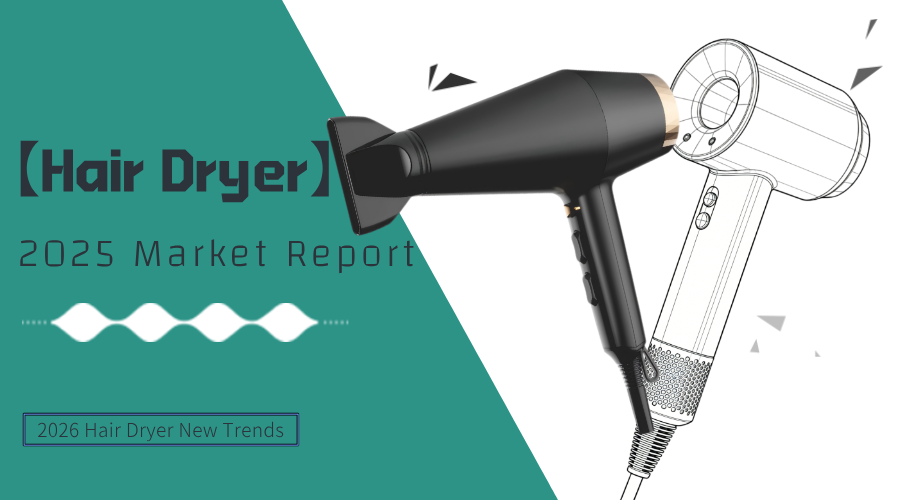
This news analyzes 2025 global hair dryer (blow dryer) procurement, consumption habits and 2026 trends with digital data, covering market size, consumer preferences for smart/healthy products, and provides digital-supported steps for overseas buyers to select market-fit products and find high-quality suppliers.
How Overseas Buyers Select Market-Fit Hair Dryers and Find High-Quality Suppliers? 2025 Global Procurement, Consumption Habits and 2026 Trends
